
How Many Restrooms Does a County Fair Need in Ocala?
There is no single number that fits every fairground. What matters is peak attendance per hour, how long the gates stay open, and where people cluster: midway, grandstand, livestock barns, food row. Our guide on how many porta potties you need walks through the math event planners actually use, and we run the same math for fair organizers in Ocala before we quote anything.
OSHA 1926.51(c) sets construction site ratios, not fair ratios, but it is still the closest published benchmark for sizing sanitation to headcount, and fair planners lean on the same logic: more people, more fixtures, shorter wait times. A fair with food vendors also needs more units near concessions than near static exhibits, because that is where lines form fastest.
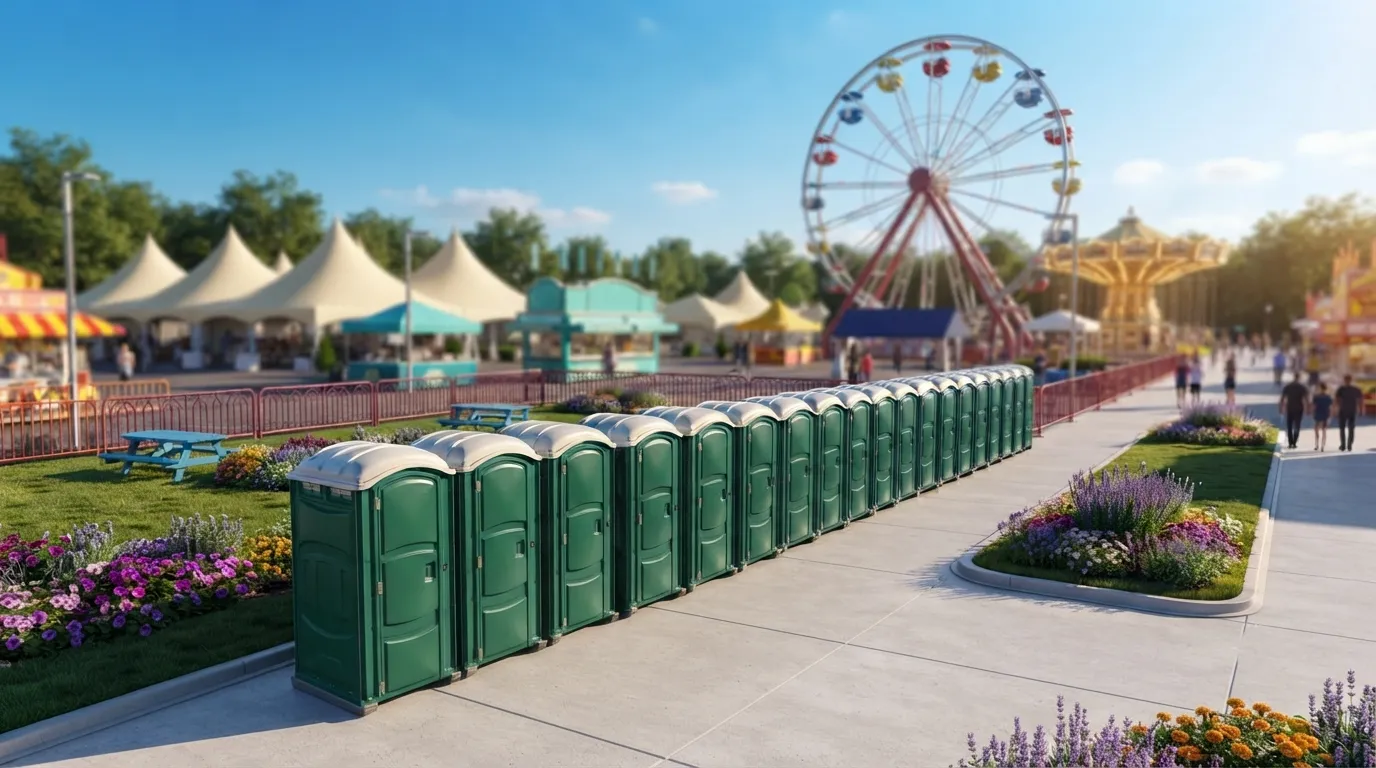
We typically spread standard porta potty rental units across the grounds in clusters rather than one bank near the entrance, so nobody walks the length of a football field to find one that is open. Grandstand events and evening concerts pull a second wave of traffic after dark, so we place units near lit walkways and coordinate with light tower rental placement where the grounds run late. For fairs stretching multiple days, ask about monthly porta potty rental pricing if the event runs alongside a longer setup and teardown window.
What Restroom Options Work Best for a Fair Crowd?
Most fairs mix three things: standard units for general crowd flow, ADA units at required intervals, and handwashing stations near every food booth. That mix covers code, comfort, and the reality that fairground mud does not care about your schedule.
ADA accessible porta potty units matter here. ADA Standards section 213.2 requires that where single-user portable units are clustered, at least 5 percent of the cluster be accessible, with a minimum of one unit regardless of cluster size. ADA Standards section 304.3.1 calls for a 60 inch turning circle inside the unit, and section 404.2.3 sets a 32 inch minimum clear door opening. We check ground surface too, since ADA Standards section 302.1 requires a stable, firm, slip resistant path, which on a fairground usually means mats or planking over grass and gravel.
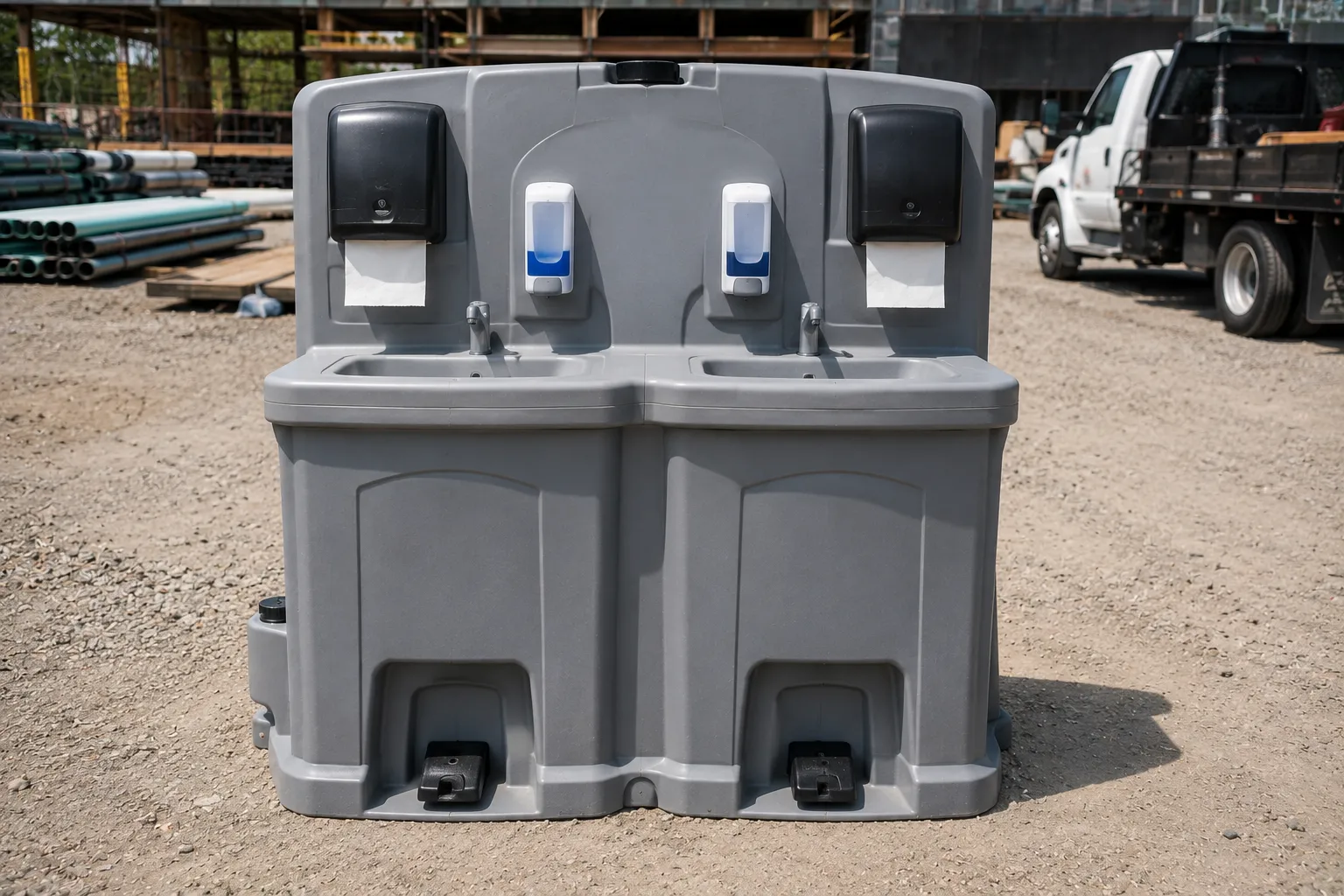
For organizers who want a nicer option near VIP seating, sponsor tents, or a beer garden, deluxe flushable porta potty units or a full restroom trailer rental upgrade the experience without changing the footprint much. A 4 stall restroom trailer handles moderate traffic near a grandstand, while an 8 stall restroom trailer fits larger multi-day fairs better. Every food vendor row should have a handwashing station rental or portable sink rental nearby. 29 CFR 1910.141(d)(2) requires washing facilities to be stocked with soap and towels or a hand drying device, and hand sanitizer alone does not satisfy that.
Where Should Restrooms Go on the Fairground?
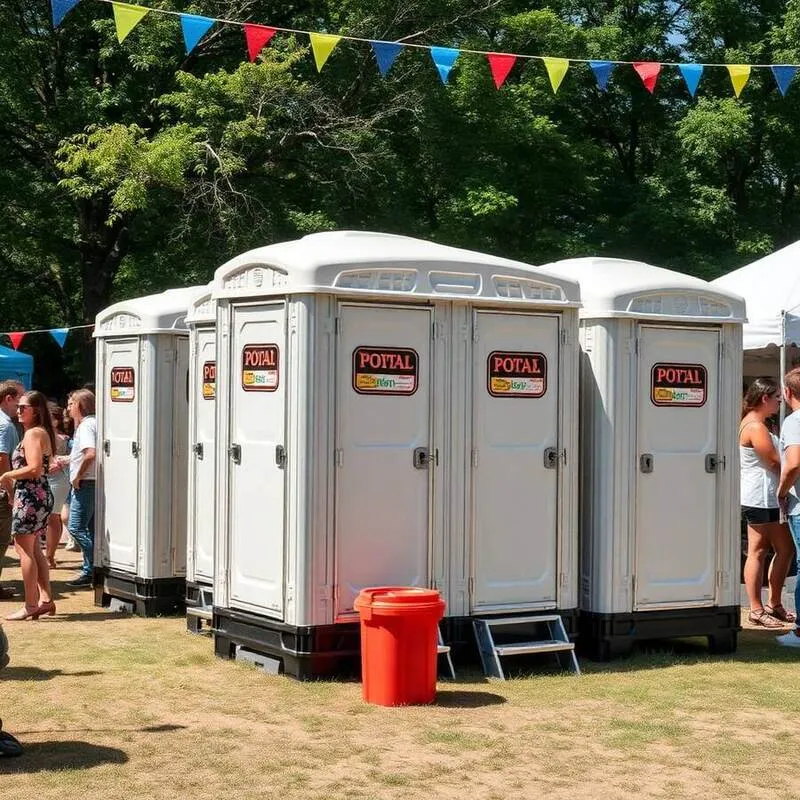
Placement decides whether restrooms actually get used. Put them too far from the midway and people skip the walk; put them too close to food prep and you have a different problem. Our porta potty placement guide covers ground clearance, service access, and distance from serving lines in more depth.
Service trucks need roughly 60 feet of straight clearance behind them to pump or swap a unit, which matters on a fairground with tight lanes between barns and booths. We map delivery and service routes before the fair opens so trucks are not crossing foot traffic during open hours. Standard units run about 44 by 48 inches on the ground and 92 inches tall, small enough to tuck along fence lines without blocking sightlines to the stage or arena.
If the fair runs near livestock areas, expect heavier use and faster tank fill, which is normal, and our service schedule accounts for it. Ocala fairgrounds events often run alongside other bookings in the region, and we coordinate route timing with nearby jobs in Silver Springs, about 7.3 miles northeast, and Liberty Triangle, about 9.2 miles southwest, so a fair in Ocala does not compete for the same truck slot as another event across town.
How far in advance should we book restrooms for a county fair?
Book as soon as your dates and expected attendance are set, ideally 4 to 8 weeks out for a multi-day fair. Fair season pulls trucks from event restroom rental jobs across Ocala at the same time, so early booking locks your unit count and delivery window.
Do you provide restrooms for livestock and 4-H areas separately from the midway?
Yes. Livestock barns and hand-labor areas get their own cluster, often paired with a handwash station, separate from midway and food row units. This keeps service routes efficient and matches how farm and agricultural restrooms are typically laid out at fair-style events.
What happens if a unit runs low during a busy fair day?
We build service intervals around your attendance curve, and ANSI/PSAI Z4.3 sets a baseline of one weekly service visit for lighter use, but fairs need tighter cycles. Call us and we can route an extra pump or swap during the event.
Can we get restrooms for just the fair weekend instead of the whole run?
Yes. Weekend-only pricing runs separately from daily or weekly rates and fits fairs that only need heavy coverage Friday through Sunday. Ask us to break out weekend pricing when you request your quote.
Do fairground restrooms need permits from the city?
Placement in any public right of way needs confirming with the City of Ocala before delivery. We help sort that out, but we recommend checking with the city directly since permit rules vary by lot and by event.
Next step
Get a delivery date
Tell us the address, the dates and the headcount. We size the order and confirm the route.